 The head of the UCLA hospital, Dr. David Feinberg, and twenty-one other academics are going unpunished despite their role in perpetrating a healthcare fraud that has resulted in the largest fine ever paid by a pharmaceutical company in US history. . . .
. . . continued at TheNation.com HERE
Remembering Gore Vidal: The Nation, 8-1
 Gore Vidal was a citizen of the republic and a critic of the empire. “We are the United States of Amnesia,” he wrote in The Nation in 2004. “We learn nothing because we remember nothing.”
More at TheNation.com,HERE.
Blaming Poor Women: Katha Pollitt – KPFK 8/1
 LISTEN online HERE — SUBSCRIBE to iTunes podcast HERE
Is poverty caused by bad choices made by women? If poor women had better values, would everything be better? KATHA POLLITT comments – she’s a columnist for The Nation.
.
Plus: LA prosecutors have been concealing evidence from defendants in criminal cases, evidence about misconduct by jail guards—that’s what the ACLU of Southern California says in a new lawsuit. MARK ROSENBAUM of the ACLU will explain – he says “In Los Angeles County, we have a system of injustice for all criminal defendants.”
 Also: What happens if Republican vote suppression tactics succeed in November, and Mitt Romney is elected because Democrats who are poor, young or minorities were prevented from voting? What do we do then? HAROLD MEYERSON has been thinking about that – he writes for The Washington Post op-ed page and The American Prospect.
Tom Frank: Our Rigged Colleges – KPFK 7/25
 LISTEN online HERE — SUBSCRIBE to iTunes podcastHERE
TOM FRANK asks the question: “Given the rigged, rotten nature of the higher-ed game, why would people play by the rules?” The answer: lots don’t. Tom wrote about fake degrees and phony college credentials — and their larger social and cultural significance — for his column in the August issue of Harper’s.
Plus: the fight for MOCA, the Museum of Contemporary Art in LA — it’s not a battle between “populists” and “aesthetes”; it’s a takeover by the corporate mentality. CHRISTOPHER KNIGHT explains — he’s art critic for the LA Times and he blogs at Culture Monster.
 Also : PETER EDELMAN is one of my heroes — he resigned from the Clinton adminstration in protest against Clinton’s treatment of the poor in “the abolition of welfare as we know it.” Today he talks about how we can end poverty in America now – and what’s stopping us.
Peter’s new book is So Rich, So Poor: Why It’s Hard to End Poverty in America.
What Romney’s Hiding: The Nation 7/21
 The news has been full of speculation about why Mitt Romney won’t release his tax returns before 2010. People say maybe it’s because he paid zero taxes one year, or maybe he made a truly stupendous amount of money one year, or maybe they show he stayed at Bain Capital longer than he’s said.
I have a different theory: Romney won’t release his tax returns because they show he’s actually a Muslim born in Kenya. . . . continued at TheNation.com, HERE
Bain Capital & Salvadoran Death Squads: Nation 7/19
 Some of the first investors in Mitt Romney’s firm Bain Capital, according to a report on the Los Angeles Times, were Salvadoran families living in Miami with members accused by the US government of funding death squads in the brutal civil war in El Salvador. . . .
. . . continued at TheNation.com, HERE
Sarah Vowell: Hawaii and History – KPFK 7/18
 LISTEN online HERE — SUBSCRIBE to iTunes podcast HERE
SARAH VOWELL talks about the “orgy of imperialism” that led to the Americanization of Hawaii. She has one of the great American voices—first on “This American Life,” then in a series of wonderful books that became best-sellers. She’s been a frequent guest of Jon Stewart’s and David Letterman’s. Now her newest book is out in paperback – it’s called Unfamiliar Fishes.
Plus: Islamophobia and its Discontents: LAILA LALAMI talks about living with anti-Muslim bias. Laila teaches creative writing at UC Riverside; her novel is Secret Son, and she wrote the recent cover story for The Nation on Islamophobia.
 Also: “Mr. Satan Goes to Wall Street“: it’s a new street-theater musical comedy by the award-winning guerrilla-theater company the Imagination Liberation Front. Mr. Satan will perform this summer, for the Occupy Wall Street troops in Zuccotti Park – and in the streets outside of the Republican and Democratic national conventions. Benefit Wed. 8pm at Sacret Fools Theater in E. Hollywood; info HERE; contribute HERE (to “Imagination Liberation Front”).
Dear Mr. Romney, I Want More Free Stuff: The Nation, 7/14
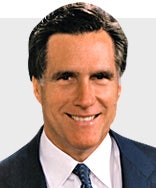 Dear Mr. Romney, I was hoping you could tell me how to get more free stuff from the government, and I see that you took up that question after your speech to the NAACP last week. . . .
. . . continued at TheNation.com, HERE
Afghanistan: Obama’s War — KPFK 7/11
 LISTEN online HERE — SUBSCRIBE to iTunes podcast HERE
The United States has never understood Afghanstan – and probably never will. That’s what RAJIV CHANDRASEKARAN says – he’s a Washington Post reporter who has spent years covering the wars Afghanistan and Iran. Now he has a new book out – Little America: The War within the War for Afghanistan.
And we will have our political update from HAROLD MEYERSON—he writes a column for the op-ed page of the Washington Post, and he’s editor-at-large of The American Prospect.
 Also: The 100 Greatest Americans of the 20th Century: A Social Justice Hall of Fame: from Gene Debs and Clarence Darrow to Bruce Springsteen and Michael Moore — PETER DREIER has a list. He teaches politics at Occidental College, he writes for The Nation, the L.A. Times, and The American Prospect, and his new book about the 100 greatest Americans is out now from Nation Books.
Reagan & Disney: Together at Last – The Nation 7/10
 From “Mr. Gorbachev, tear down this wall” to “A dream is a wish your heart makes”: Ronald Reagan and Walt Disney are together at last in an unprecedented Disney exhibit at the Reagan Library in Simi Valley, California.
I had one question: why?
. . . continued at TheNation.com, HERE.
About

Start Making Sense
“Start Making Sense” is The Nation magazine’s weekly podcast, hosted by Jon Wiener. It’s political talk without the boring parts.
New episodes posted every Wednesday morning. More info at https://www.thenation.com/content/start-making-sense/.
- Listen or Subscribe to Start Making Sense at Apple Podcasts https://podcasts.apple.com/us/podcast/start-making-sense-with-jon-wiener/id1677396303. Or wherever you get your podcasts.