 November 15, 1969—“Vietnam Moratorium Day”—nearly half a million people gathered on the mall in Washington DC, to protest the war, and Pete Seeger was on the stage. “I guess I faced the biggest audience I’ve ever faced in my life,” he told me in an 1981 interview. “Hundreds of thousands, how many I don’t know. They stretched as far as the eye could see up the hillside and over the hill.” The song he sang was “Give Peace a Chance” . . .
. . . continued at TheNation.com, HERE.
When Nixon asked Haldeman about Philip Roth. . . . L.A. Review of Books 1/25
 RICHARD NIXON didn’t talk much about American writers. On the White House tapes, which recorded his conversations from February 1971 to July 1973, there’s no mention of Norman Mailer, John Updike, or Gore Vidal. There’s no mention of best-selling authors of the era like William Peter Blatty of The Exorcist or Frederick Forsyth of The Day of the Jackal. But Nixon did talk about Philip Roth.
NIXON: What if anything do you know about the Roth book?
HALDEMAN: Oh, a fair amount.
. . . continued at LA Review of Books, HERE.
Gary Shteyngart Q&A: The Nation 1/23
JW: You spent your first seven years in the Soviet Union—what was your 7-year-old understanding of communism, of Lenin himself?
 GS: Let’s start with Lenin. One of the biggest statues of Lenin was in Leningrad right outside our window. I loved Lenin so much that I would wake up every morning and hug his pedestal. When I was 5, I wrote a book called Lenin and His Magical Goose, in which Lenin and a talking goose conquer Finland and make it a socialist country. I very much wanted to become a soldier in the Red Army, or a cosmonaut. I wanted to try to launch an attack against the United States and make it safe for socialism.
– – – continued at The Nation, HERE.
NSA “Reform,” from Nixon to Obama: Rick Perlstein KPFK 1/22
LISTEN online HERE— iTunes podcast HERE
President Obama has proposed “reforms” of the NSA, suggesting we need a plan to come up with a plan about bulk metadata gathering on civilians. RICK PERLSTEIN compares Obama’s proposals with the Church Committee’s final report from 1976 on spying on Americans. Short version: the Nixon administration was better.
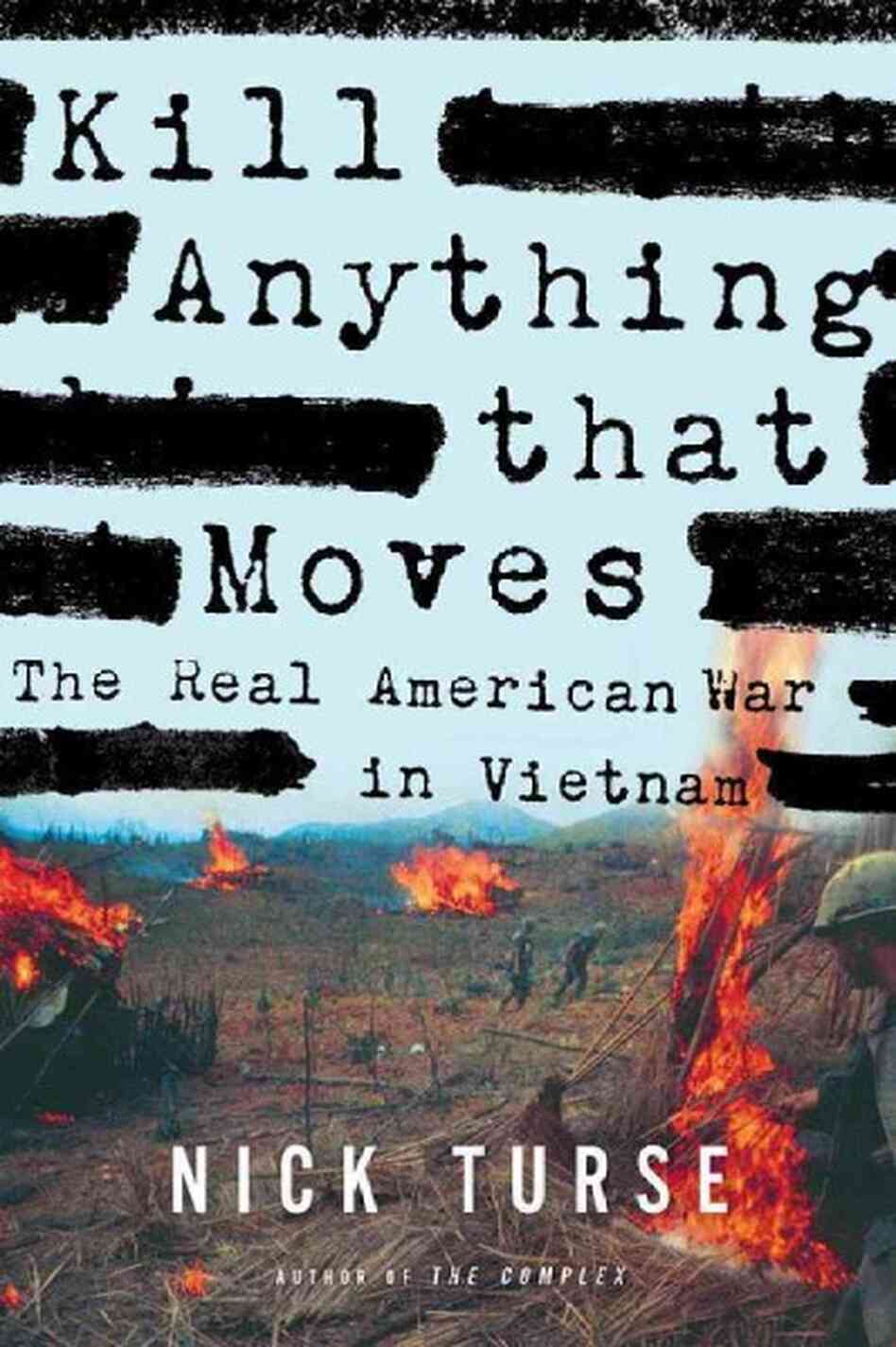 Also: the My Lai massacre was not an isolated incident; millions of innocent Vietnamese civilians were killed and wounded by American forces—“a My Lai a month” is what award-winning reporter NICK TURSE calls it. His decade of research in secret Pentagon archives and interviews with vets and Vietnamese are the basis of his important book, KILL ANYTHING THAT MOVES: The Real American War in Vietnam–it’s out now in paperback.
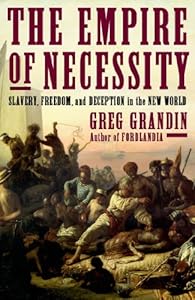 Plus: Slavery, freedom, and Islamophobia: GREG GRANDIN uncovered the true story of a rebellion on a slave ship in 1805–by African Muslims– that inspired Herman Melville to rethink slavery and freedom 50 years later. It’s a story with echoes in our own time as Tea Party activists charge that Obama is a secret Muslim from Africa. Greg teaches history at NYU; his magnificent new book is The Empire of Necessity: Slavery, Freedom, and Deception in the New World. It is featured on the cover of The Nation this week.
Gary Shteyngart: Little Failure. KPFK 1/15
 LISTEN online HERE— iTunes podcast HERE
GARY SHTEYNGART left Russia for the US in 1979, when he was 7 years old—part of the deal where Jimmy Carter gave the Russians American grain and Brezhnev gave the Americans Soviet Jews—win-win! Shteyngart’s story, told in his new memoir LITTLE FAILURE, is self-mocking, sarcastic, tender, and hilarious. Watch the trailer HERE. Gary will be reading Little Failure at the Skirball on Thurs Jan 16 at 8pm. Tickets $10 HERE.
Plus: The Los Angeles labor movement and its allies are campaigning for the highest minimum wage in the country: $15/hour. Even more amazing, we are likely to win. NANCY COHEN will explain; she wrote about it for The New Republic. #RaiseLA
 Also: Breaking in to the FBI office in Media, PA: In 1971, unknown activists stole files from an FBI office outside of Philadelphia, and proceeded to expose Bureau abuse of power and illegal surveillance. Now the burglars have surfaced and told their story in the book The Burglary by Betty Medsger. SETH ROSENFELD will explain—he’s author of the award-winning SUBVERSIVES and spent two decades suing the FBI for their files on the Free Speech Movement. (Left: two of the burglars today, John and Bonnie Raines.) WATCH the video HERE.
Katha Pollitt: A rough year for women–KPFK 1/8
LISTEN online HERE— iTunes podcast HERE
Women’s rights, last year, and this year: KATHA POLLITT on where we stand now. It’s been rough—but isn’t it always? Katha—poet, essayist and columnist–wrote recently for The Nation about “The Year in Feminism.” Support the National Network of Abortion Funds HERE.
 Plus: Beatles versus Stones: which side were you on? JOHN McMILLIAN constrasts media myths with musical styles and political and cultural realities. John teaches history at Georgia Tech; his new book is Beatles v. Stones. PLAYLIST: Beatles’, Stones’ versions of “I Wanna Be Your Man”; “Revolution” vs. “Street Fighting Man.”
 Also: the most effective political operation the American left has seen in decades: the Working Families Party of New York. HAROLD MEYERSON explains – he wrote about it for The American Prospect and also writes a column for the Washington Post op-ed page.
Dick Cheney in Nixonland: TheNation 12/19
 Dick Cheney came to the Nixon Library this week to talk about his new book, Heart. When our most hated vice president visits the library of our most disgraced president, you look forward to a good night. So my friend Howard and I went to Yorba Linda, expecting a festive evening of Obama-bashing and a twisted trip back through the glories of the Bush years. . . . . continued at TheNation.com, HERE.
Jeremy Scahill’s “Dirty Wars” DVD: KPFK 12/11
 LISTEN online HERE— iTunes podcast HERE
A secret army, a war without end–and a journalist determined to uncover the truth: That’s the story of the film Dirty Wars and it’s out now on DVD– it’s about JEREMY SCAHILL, he’s National Security correspondent for The Nation magazine. Now the film is shortlisted for an Oscar nomination for best documentary. We’ll feature interviews with director RICHARD ROWLEY, and with Jeremy Scahill-– he wrote the bestseller Blackwater, and has reported from Afghanistan, Iraq, Somalia, Yemen and elsewhere. “Dirty Wars” is our featured thank-you gift in the KPFK fund drive–please pledge during the show: 818-985-5735.
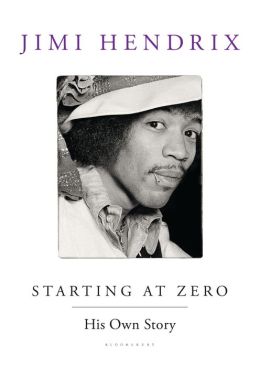 Plus: There’s a new Jimi Hendrix book that’s just been published, one nobody thought was possible – Starting at Zero: His own story, “a posthumous memoir,” assembled from Jimi’s writings and diaries by ALAN DOUGLAS and colleagues. We’ll speak with Alan –he’s best known for producing many of the posthumous Jimi Hendrix releases – and he was also a close friend of Jimi’s.
America’s War Wounded: KPFK 12/3
 LISTEN online HERE— iTunes podcast HERE
The untold story of America’s war wounded: ANN JONES reports on the horrors of war in Iraq and Afghanstan– she’s author of eight books, including the unforgettable Kabul in Winter. Her new book is They Were Soldiers: How the Wounded Return from America’s Wars. READ Ann Jones at TomDispatch HERE.
Plus: Obama’s deportation regime: a record number of deportations, and people spending years in immigration detention—but the ACLU is fighting to win rights for those detainees. AHILAN ARULANANTHAM, Deputy Legal Director of the ACLU of Southern California, will explain.
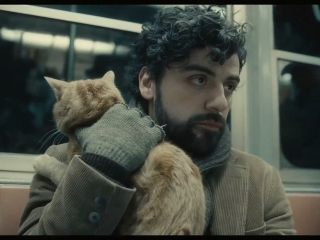 Also: In the Coen Brothers’ new film, Inside Llewyn Davis, a not-very-good folksinger tries to make it in Greenwich Village in 1961, just before Bob Dylan arrives. We’ll have comment from historian SEAN WILENTZ—author of Bob Dylan in America. The film opens in LA and NYC on Friday. PLAYLIST: “Hang me, oh hang me,” Oscar Isaac; “Please Mr. Kennedy,” Justin Timberlake; “Green Green Rocky Road,” Dave Van Ronk; “Farewell,” Bob Dylan. WATCH the trailer for Inside Llewyn Davis HERE.
Near-Misses with Nukes: Eric Schlosser on KPFK 11/26
 LISTEN online HERE— iTunes podcast HERE
A riveting story about nuclear risk, examining problems with the command and control systems set up during the Cold War, and with the men who ran them. ERIC SCHLOSSER talks about some terrifying accidents and incredibly lucky near-misses. Eric wrote the best-seller Fast Food Nation; his new book is Command and Control: Nuclear Weapons, the Damascus Accident, and the Illusion of Safety .
JOIN a WalMart protest on Friday: South LA, Panorama City, and Torrance: info HERE.
Plus: HAROLD MEYERSON on the class divide among Democrats—and on the new Calif. Initiative to raise the minimum wage to $12, sponsored by Republican millionaire Ron Unz. Harold writes a column for the Washington Post op-ed page and is editor-at-large of The American Prospect . Great interactive graphic “The 40 Year Slump” HERE
JOIN a Wal-Mart protest this Friday: South LA, Panorama City and Torrance: info HERE.
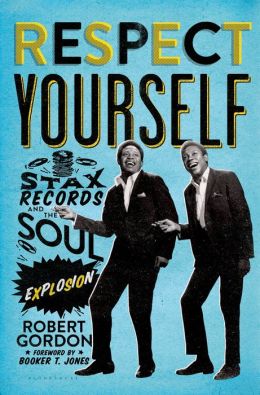 Also: The unforgettable sound of Memphis soul music in the sixties, coming from Stax records: ROBERT GORDON tells that story. His new book is Respect Yourself: Stax Records and the Soul Explosion.
Playlist: “Walkin the Dog” (Rufus Thomas, 1963); “Knock on Wood” (Eddie Floyd. 1966); “I Thank You” (Sam and Dave, 1968); “Respect” (Otis Redding, 1965).
LISTEN to newly discovered tracks “The Ghost of Stax Past” HERE
About

Start Making Sense
“Start Making Sense” is The Nation magazine’s weekly podcast, hosted by Jon Wiener. It’s political talk without the boring parts.
New episodes posted every Wednesday morning. More info at https://www.thenation.com/content/start-making-sense/.
- Listen or Subscribe to Start Making Sense at Apple Podcasts https://podcasts.apple.com/us/podcast/start-making-sense-with-jon-wiener/id1677396303. Or wherever you get your podcasts.